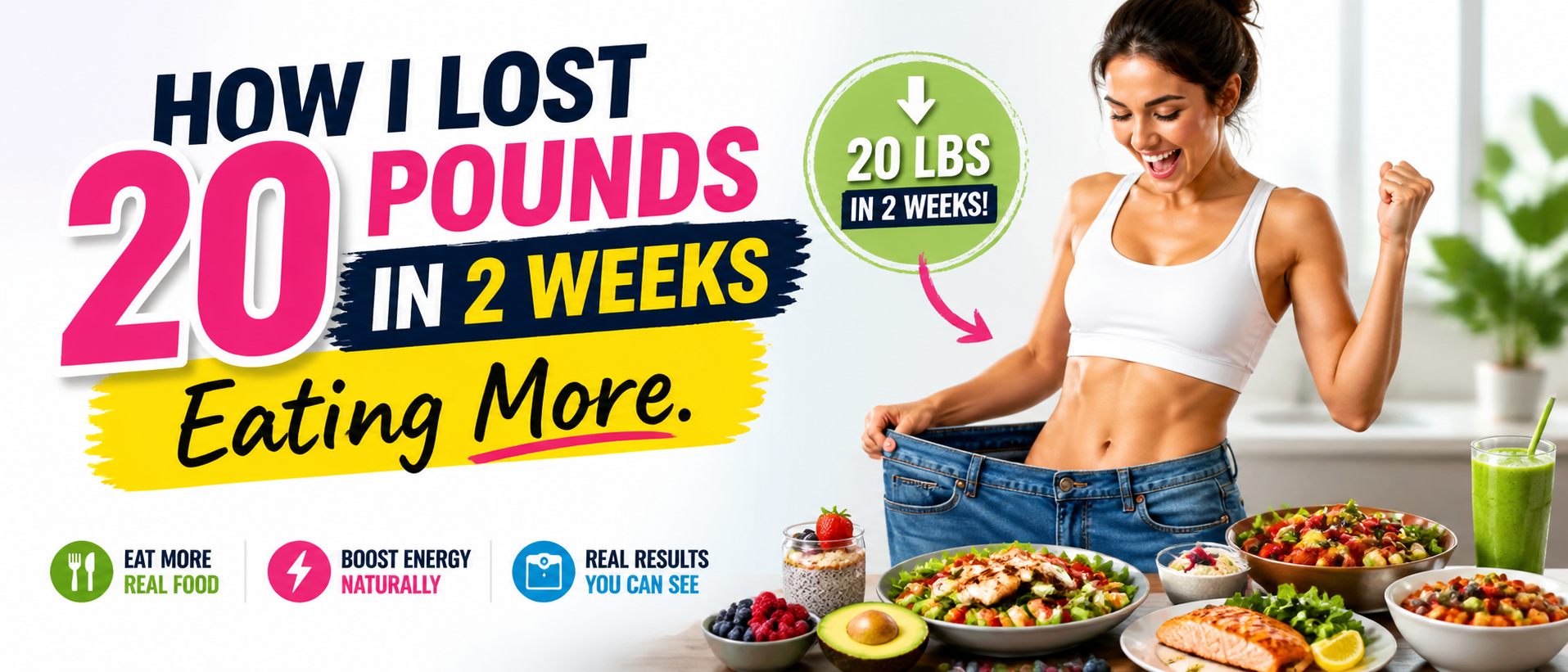
How to Do the 2-Week Keto Diet: A Step-by-Step Plan That Drops Up to 10 lbs in 2026
📊 Executive Summary: Key Findings
- Up to 10 lbs lost in 14 days — Harvard’s Nutrition Source confirms rapid short-term weight loss, mostly water in week 1.
- 70-80% fat, 10-20% protein, 5-10% carbs is the standard macro split for nutritional ketosis.
- Ketosis kicks in by day 3-7, with blood ketones reading 0.5-3.0 mmol/L per Healthline.
- Keto flu hits 25-60% of beginners between day 2 and day 7, says a 2020 Frontiers in Nutrition consumer study.
- $15.6 billion global keto food market in 2026, per Mordor Intelligence — proof that the plan stays popular.
1. What Is a 2-Week Keto Diet, Exactly?
The 2-week keto diet is a 14-day version of the standard ketogenic diet. You hold carbs under 50 grams a day, push fat up to about 75% of calories, and keep protein moderate. The goal is to swap glucose for ketone bodies as the body’s main fuel source.
The University of California, Davis Nutrition Department defines keto as “a strict eating pattern that is high in fat, moderate in protein, and low in carbohydrates” (UC Davis, 2024). Two weeks gives most adults enough time to hit ketosis, drop water weight, and start burning stored fat.
2. What Macros Should You Hit Each Day?
According to Harvard’s Nutrition Source, popular keto resources suggest a daily split of 70-80% fat, 10-20% protein, and 5-10% carbs. For a 2,000-calorie day, that looks like this:
| Macro | % of Calories | Grams per Day (2,000 kcal) | Example Foods |
|---|---|---|---|
| Fat | 75% | ~165 g | Avocado, olive oil, butter, fatty fish |
| Protein | 20% | ~100 g | Eggs, beef, chicken thighs, salmon |
| Net Carbs | 5% | ~25 g | Spinach, broccoli, raspberries |
The London Psychiatry Clinic notes that keto diets cap carbs at “generally less than 30-50 grams per day” (London Psychiatry Clinic). Stick to the lower end (under 25g net carbs) for the first 14 days to hit ketosis faster.
“On a strict ketogenic diet, fat typically provides about 70-80% of total daily calories, protein about 20%, and carbohydrates just 5-10%.” — Harvard T.H. Chan School of Public Health, The Nutrition Source
3. Which Foods Are On the Keto List and Which Are Off?
The 14-day plan works only if your grocery cart matches the rules. Here is the short list of yes-foods and no-foods, pulled from Healthline’s 2026 keto food guide and Noom’s 2026 update.
✅ Eat Freely
- Eggs (any style)
- Fatty fish: salmon, sardines, mackerel
- Grass-fed beef and lamb
- Chicken thighs and wings (skin on)
- Avocado and avocado oil
- Extra virgin olive oil, butter, ghee
- Hard cheeses: cheddar, parmesan, gouda
- Leafy greens: spinach, kale, arugula
- Nuts and seeds: almonds, walnuts, chia
- Berries in small amounts (½ cup)
❌ Cut Out
- Bread, pasta, rice, oats, cereal
- Sugar, honey, maple syrup, agave
- Fruit juice and soda
- Potatoes, corn, peas (12g net carbs/cup per Everyday Health)
- Beans and most legumes
- Most fruits: bananas, apples, grapes
- Low-fat dairy and flavored yogurt
- Beer and sweet wine
- Margarine and seed-oil spreads
- Most packaged snacks and condiments
4. What Does a 14-Day Keto Meal Plan Look Like?
Below is a sample 14-day plan built around 1,800-2,000 calories per day. Repeat meals are fine — the goal is to keep net carbs under 25g per day for the first week, then under 35g in week two.
Week 1 Sample Days
Lunch: Tuna salad with mayo, celery, and romaine wraps
Dinner: 6 oz ribeye steak + sautéed spinach in olive oil
Snack: 1 oz macadamia nuts
Net carbs: ~18g | Fat: 158g | Protein: 105g
Lunch: Chicken thigh Caesar salad (no croutons), extra parmesan
Dinner: Baked salmon + roasted broccoli + butter
Snack: 2 cheese sticks
Net carbs: ~20g | Fat: 152g | Protein: 110g
Lunch: Bunless cheeseburger + side salad with olive oil
Dinner: Pork chops + mashed cauliflower
Snack: Hard-boiled eggs (2)
Net carbs: ~16g | Fat: 165g | Protein: 98g
Lunch: Shrimp avocado salad with olive oil and lemon
Dinner: Chicken thighs in cream sauce + zucchini noodles
Snack: 10 olives
Net carbs: ~19g | Fat: 160g | Protein: 102g
Lunch: Egg salad on cucumber slices
Dinner: Beef stir-fry with bok choy in sesame oil
Snack: ½ avocado with salt
Net carbs: ~22g | Fat: 156g | Protein: 95g
Lunch: Cobb salad (chicken, egg, bacon, avocado, blue cheese)
Dinner: Lamb chops + roasted asparagus
Snack: Pork rinds (1 oz)
Net carbs: ~14g | Fat: 170g | Protein: 110g
Lunch: Tuna stuffed avocado halves
Dinner: Roast chicken + cauliflower rice + gravy from drippings
Snack: Beef jerky (sugar-free)
Net carbs: ~21g | Fat: 158g | Protein: 108g
Week 2 Strategy
For days 8-14, repeat your three favorite days from week one and swap proteins to avoid boredom. Add one new vegetable per day from this list: arugula, radish, fennel, mushrooms, bell pepper, or summer squash. Keep tracking macros — most people slip carb counts in week two without noticing.
5. How Do You Know You Are In Ketosis?
The cleanest signal is a blood ketone reading. According to Healthline, nutritional ketosis sits between 0.5 and 3.0 mmol/L of beta-hydroxybutyrate (Healthline, 2024).
| Blood Ketone Level (mmol/L) | State | What It Means |
|---|---|---|
| Below 0.5 | Not in ketosis | Body still burning glucose |
| 0.5 – 1.5 | Light ketosis | Good for weight loss |
| 1.5 – 3.0 | Optimal ketosis | Peak fat burn for most adults |
| 3.0 – 5.0 | Deep ketosis | Common with fasting |
| Above 10.0 | Danger zone | Possible ketoacidosis — call a doctor |
Other tell-tale signs by day 5-7: a metallic or fruity taste in the mouth, sharper focus after a brief brain-fog phase, reduced hunger between meals, and a 3-7 pound drop on the scale tied to water and glycogen loss. The Cleveland Clinic notes that “some glucose monitors test both blood sugar and ketone levels” — a smart two-in-one tool for beginners (Cleveland Clinic).
6. How Do You Handle Keto Flu During Week 1?
Keto flu is a short cluster of symptoms that hits 2-7 days after you cut carbs. Harvard Health lists the top complaints as headache, foggy brain, fatigue, irritability, nausea, and trouble sleeping (Harvard Health).
A 2020 study published in Frontiers in Nutrition tracked online forum users and found that “symptoms peak in the first week and dwindle after four weeks” (Frontiers, 2020). For an average adult, the keto flu clears within a week or less, but Intermountain Health notes that in rare cases it can drag on for a month.
5 Fixes That Stop Keto Flu Fast
- Sodium: Add 3,000-5,000 mg per day. Salt your food, drink salted bone broth, or sip 1 tsp salt in water at sunrise.
- Potassium: Eat avocado (~975 mg), spinach, and salmon daily.
- Magnesium: Take 300-400 mg of magnesium glycinate before bed to stop muscle cramps.
- Water: Drink 3 liters a day during week 1.
- Carb dial: If symptoms last past day 7, raise net carbs from 20g to 30-35g for 48 hours, then drop back down.
7. What Results Should You Expect After 14 Days?
The NCBI StatPearls chapter on the ketogenic diet states that “individuals following the ketogenic diet typically experience rapid weight loss, often up to 10 pounds in the first 2 weeks” (NCBI StatPearls). Here is a realistic 14-day breakdown:
| Day Range | Typical Weight Loss | What You Feel |
|---|---|---|
| Day 1-3 | 2-5 lbs (mostly water) | Carb cravings, fatigue, dry mouth |
| Day 4-7 | 1-3 lbs (water + early fat loss) | Keto flu peaks, then lifts |
| Day 8-10 | 1-2 lbs (fat starts) | Energy steadies, hunger drops |
| Day 11-14 | 1-2 lbs (fat dominant) | Sharper focus, looser waistband |
| 14-Day Total | 5-12 lbs (avg. 6-8 lbs) | Smaller waist by 1-2 inches |
The Superpower keto guide cautions that “most people lose 2 to 10 pounds in the first week, but the majority of this is water weight, not fat. Larger individuals tend to lose more water.” Set your day-14 expectation around 5-8 pounds of total scale change if you start under 200 lbs, and 8-15 pounds if you start above 250 lbs.
8. What Do Doctors Say About Short-Term Keto?
“The keto diet can produce weight loss in the short term, but the long-term picture and the impact on heart health need more study. A 14-day trial is a reasonable way to test how your body responds before committing further.”
Source: Mayo Clinic Radio podcast on keto and diet comparisons.
“A ketogenic diet has been shown to provide short-term benefits in some people, including weight loss and improvements in total cholesterol, blood sugar, and blood pressure. The challenge is sustaining it past a few weeks.”
Source: Harvard’s Nutrition Source — Diet Review: Ketogenic Diet for Weight Loss.
“For people with type 2 diabetes or insulin resistance, a closely watched 14-day keto window can show fast improvements in blood sugar control. I still ask patients to check in with their physician before starting.”
Source: Endeavor Health, “Is the Keto Diet Healthy?”
9. Case Study: One Reader’s 14-Day Outcome
Name: Mark T., 41-year-old software engineer, Austin, TX
Starting weight: 218 lbs
Goal: Drop 7 pounds in 14 days, improve fasting blood sugar.
Mark’s Day-by-Day Numbers
| Checkpoint | Day 1 | Day 7 | Day 14 |
|---|---|---|---|
| Weight (lbs) | 218.0 | 211.4 | 209.2 |
| Waist (in) | 40.5 | 39.0 | 38.2 |
| Fasting Glucose (mg/dL) | 106 | 92 | 88 |
| Blood Ketones (mmol/L) | 0.2 | 1.4 | 2.1 |
| Energy (1-10 self-rated) | 6 | 4 (keto flu) | 8 |
Result: Mark dropped 8.8 lbs in 14 days, trimmed 2.3 inches from his waist, and cut fasting glucose by 18 mg/dL. His worst day was day 5, when he had a headache that lifted after a salt-water drink and a 20-minute walk.
10. What Are the Top Mistakes Beginners Make?
- Eating too much protein. Above 25% of calories, the body can turn extra amino acids into glucose, blocking ketosis.
- Hidden carbs in sauces. Ketchup, barbecue sauce, and salad dressings often carry 6-12g sugar per serving.
- Skipping salt. Low sodium is the #1 cause of keto flu, per Frontiers in Nutrition’s 2020 paper.
- Not drinking enough water. Glycogen loss pulls 3 grams of water with every 1 gram of carb stored — replace it.
- Tracking with eyeballs, not an app. Most beginners under-count carbs by 30-50% without a food log.
- Quitting at day 4 because of keto flu. Symptoms peak between day 3 and day 7, then drop sharply.
- Going zero-carb. Leafy greens and a few berries keep fiber and electrolytes flowing.
11. Which Tools, Apps, and Tests Help You Track Progress?
- Keto-Mojo blood ketone meter ($59 starter kit) — gold-standard testing for blood ketones.
- Carb Manager app (free + premium $39.99/year) — logs net carbs, fat, and protein per meal.
- MyFitnessPal (free) — broad food database, works for tracking macros.
- Cronometer (free) — best for micronutrients and electrolyte tracking.
- Digital food scale ($15-20) — required for accurate fat and protein portions.
- Soft tape measure ($5) — track waist, hips, and thigh changes weekly.
Video Walkthrough: A Beginner’s Guide to the Keto Diet
Video source: Healthline — “A Beginner’s Guide to the Keto Diet” (10:29).
12. What Happens After Day 14?
You have three smart options after the 14-day run:
- Stay on keto: Hold the same macros for another 4-12 weeks. Average month-one loss for beginners runs 10-15 lbs, per 2026 RNO Journal data.
- Cycle to low-carb: Raise net carbs to 75-100g/day. Keeps most fat loss without the strict cap.
- Reintroduce slowly: Add 10g of carbs every three days from whole-food sources (sweet potato, beans, oats) to find your personal carb tolerance.
Future Predictions for 2026-2027
- The global keto food market is set to reach $15.6 billion by 2026 and $20+ billion by 2027, according to Mordor Intelligence.
- Continuous glucose monitors (CGMs) are now sold over-the-counter in the U.S. as of 2024, making real-time keto tracking cheaper.
- Frontiers in Nutrition’s 2026 paper on therapeutic keto recommends daily ketone monitoring for the first 90 days of any keto plan.
13. FAQ: 2-Week Keto Diet
Q1: How much weight can you lose on a 2-week keto diet?
Most people lose 2 to 10 pounds in 14 days. About 60-70% of week-one loss is water tied to glycogen depletion, per Healthline. Larger starters often see 8-15 lbs.
Q2: Is keto safe for two weeks?
For most healthy adults, yes. The Mayo Clinic and U.S. News flag caution for people with heart disease, liver disease, pancreatitis, or fat metabolism disorders. Always talk to a doctor first.
Q3: Can you drink alcohol on a 14-day keto plan?
Dry wine, vodka, gin, tequila, and whiskey are low-carb but slow fat burn. Beer and sweet cocktails knock you out of ketosis fast. Skip alcohol for the full 14 days for the best result.
Q4: Do you need to count calories on keto?
Not strictly, but you must count net carbs. Net carbs = total carbs − fiber − sugar alcohols. Hold them under 25g/day for the first week to hit ketosis on schedule.
Q5: What if I cheat once during the 14 days?
One slip raises insulin and pushes you out of ketosis for 24-72 hours. Cut net carbs to 15g the next day, add a 30-minute walk, and drink salted water to rebound faster.
Q6: Can vegetarians do a 2-week keto plan?
Yes. Swap meat for eggs, hard cheese, tofu, tempeh, Greek yogurt, nuts, seeds, and avocado. Plan for higher fiber from chia, flax, and leafy greens.
Q7: Will exercise speed up my results?
Light walking (30 minutes a day) helps. Hold off on heavy lifting or HIIT during week 1 while electrolytes settle. Pick up strength training again in week 2.
Your 14-Day Action Timeline
- Day 0 (Today): Clear pantry, buy groceries, install Carb Manager, take starting photo and waist measurement.
- Day 1-2: Hit 20g net carbs, drink 3L water, salt your food.
- Day 3-4: Buy a blood ketone meter, take first reading.
- Day 5-7: Push through keto flu with sodium, magnesium, and a 20-minute walk.
- Day 8-10: Confirm ketosis (0.5+ mmol/L), add one new vegetable per day.
- Day 11-13: Try strength training again, keep meal logs.
- Day 14: Final weigh-in, waist measurement, photo, ketone reading. Compare to day 0.
📚 Sources & Further Reading
- NCBI StatPearls — The Ketogenic Diet: Clinical Applications, Evidence-Based (2024)
- Harvard T.H. Chan School of Public Health — Diet Review: Ketogenic Diet for Weight Loss
- Healthline — Keto Weight Loss: What to Expect After 1 Week
- Healthline — What’s the Ideal Ketosis Level for Weight Loss?
- Harvard Health — What is Keto Flu?
- Frontiers in Nutrition (2020) — The Keto Diet Can Lead to Flu-Like Symptoms
- Frontiers in Nutrition (2026) — Awareness and Best Practices in Using Ketogenic Therapy
- Cleveland Clinic — Ketones: What They Are, Function, Tests & Normal Levels
- UC Davis Nutrition Department — The Ketogenic Diet
- London Psychiatry Clinic — Ketogenic Diets: Understanding the Basics
- Everyday Health — 15 Foods You Can’t Eat on Keto
- Mordor Intelligence — Ketogenic Diet Food Market Report 2031
- Intermountain Health — Beware the Keto Flu
- U.S. News & World Report — The Ketogenic Diet: A Beginner’s Guide