What Are the Hidden Belly Fat Workout Risks
Nobody Talks About in 2026?
Millions of people work out daily to lose belly fat — but many are quietly making mistakes that spike cortisol, damage the spine, and even trigger cardiac strain. Here is what the research actually says.
📋 Key Findings at a Glance
- Overtraining triggers cortisol spikes of 30–50% above resting levels, which directly drives belly fat accumulation — not loss.
- A single sit-up or crunch places 3,350 newtons (340 kg) of compressive load on the lumbar spine, according to Dr. Stuart McGill’s research at the University of Waterloo.
- Spot reduction — the idea that ab exercises burn local belly fat — is not supported by mainstream research from Harvard, Mass General Hospital, or Rush University.
- People with high visceral fat who start intense exercise without medical clearance face amplified cardiac and musculoskeletal risks due to existing systemic inflammation.
- Approximately 25,000 exercise-induced rhabdomyolysis cases occur in the US annually — many linked to high-intensity belly fat workout programs started too fast, too soon.
📑 Table of Contents
Why Do Belly Fat Workouts Sometimes Make Things Worse?
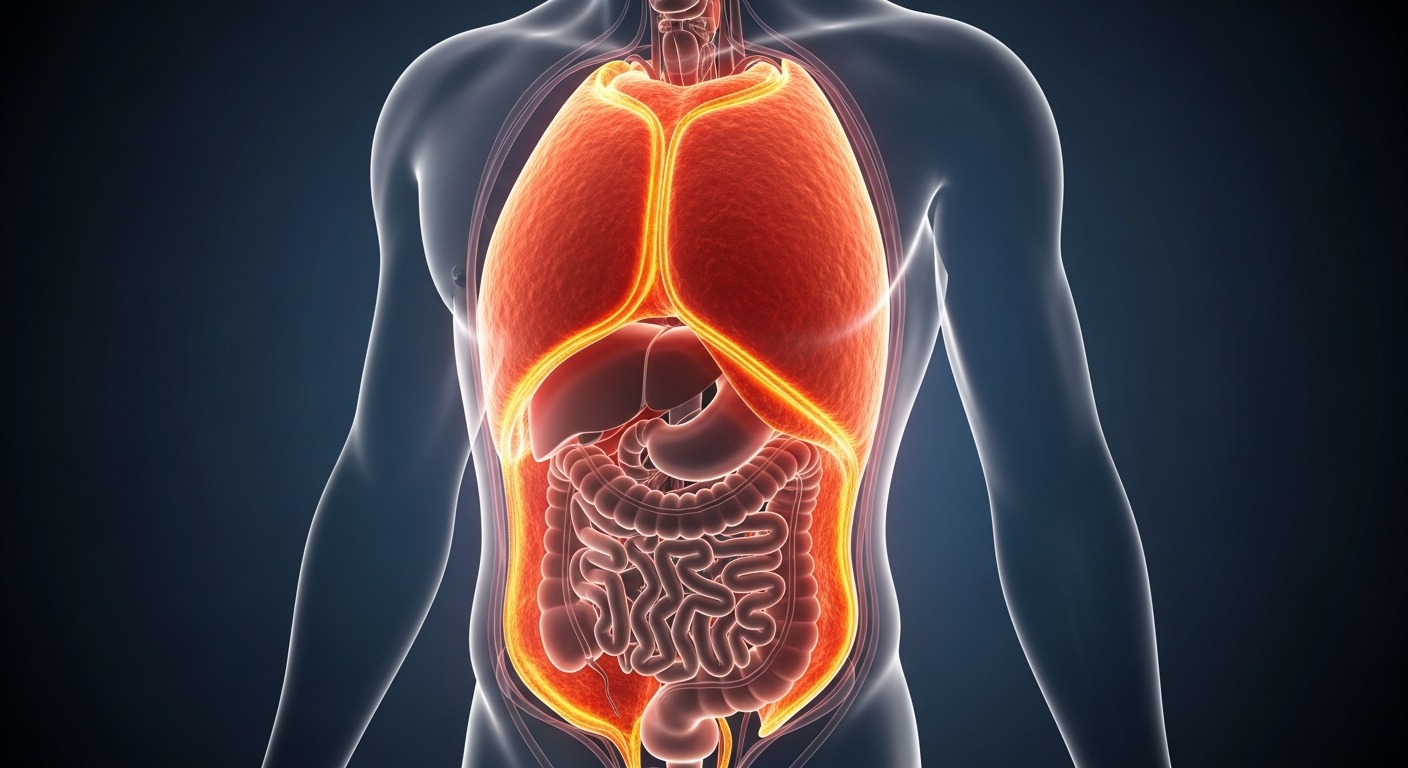
Most fitness content tells you what exercises to do for belly fat. Very little tells you what those same exercises can do to your body if you approach them wrong. The gap between those two things is where real harm happens.
People with significant belly fat — particularly those carrying visceral fat, the deep fat stored around organs — are already in a physiologically stressed state. Their inflammatory markers are elevated. Their cardiovascular system is under load. Their lumbar spine may be carrying extra stress from altered posture. When they suddenly begin intense ab-focused workouts, that stress compounds fast.
Research from Rush University notes that overtraining can lead to cortisol overproduction, and “excess amounts of this stress hormone has been found to be associated with belly fat.” In other words, training too hard too soon can produce the exact opposite of the desired outcome.
This guide covers the 9 most common hidden risks of belly fat workouts — the ones researchers have documented but that rarely appear on fitness social media or in generic workout plans. Each section includes current data, expert positions, and clear guidance on what to do instead.
What Exactly Is Visceral Fat — and Why Does It Change Your Workout Risk Profile?
Not all belly fat is the same. The fat you can pinch under your skin is subcutaneous fat. The fat you cannot see — packed between your internal organs — is visceral fat. It is the visceral variety that research consistently links to serious health outcomes.
According to the Mayo Clinic, visceral fat produces proteins called cytokines, which trigger low-level but persistent inflammation throughout the body. This inflammation is a risk factor for heart disease, type 2 diabetes, and cancer. A 2025 study published in the European Society of Cardiology journal showed that even a 1% increase in muscle fat — a close cousin of visceral fat — is linked to a 7% greater chance of serious cardiac events including heart attack or heart failure.
This pre-existing burden matters enormously when someone starts a belly fat workout program. A body that is already managing chronic low-grade inflammation, elevated blood sugar responses, and cardiovascular load is not a blank slate. Throwing intense exercise at it — particularly without medical guidance — stacks an additional physiological demand on top of an already stressed system.
“Healthier bodies with more muscle mass and less hidden belly fat are more likely to have healthier, youthful brains. The relationship between body composition and organ function runs far deeper than most people realize.”
A 2025 UK study published by UKRI found that excessive visceral fat is linked with faster aging of the heart, independent of other lifestyle factors. Researchers noted that the structural changes to the heart muscle from chronic visceral fat exposure can be permanent if not addressed early enough.
Does Spot Reduction Actually Work — or Is It Still the Biggest Myth in Fitness?
Spot reduction is the idea that working a specific muscle group burns fat from that same area. Millions of people still believe 500 daily crunches will remove belly fat. The research tells a different story.
Mass General Hospital states plainly: “Doing hundreds of crunches won’t burn belly fat. Fat loss happens across the entire body and is largely influenced by genetics, nutrition, and overall energy expenditure.” Rush University agrees, noting that sit-ups tone abdominal muscles “but not burning intra-abdominal fat.”
A 2023 Norwegian study published in PMC found limited evidence of a modest local fat-use preference during abdominal endurance exercise compared to treadmill running in adult males — but the researchers noted there was no loss of total body fat mass in the abdominal exercise group. That means the finding is physiologically interesting but not practically useful for fat loss.
The real hidden risk here is not that ab exercises do nothing. It is that people spend enormous time and physical stress doing high-repetition crunch workouts, believing those movements address belly fat — while simultaneously overloading the lumbar spine and missing more effective interventions like aerobic training and diet adjustment.
How Does Overtraining Cause Belly Fat to Grow Instead of Shrink?
One of the most counterintuitive findings in exercise science is that working out too hard can directly increase belly fat. The mechanism runs through cortisol — the body’s primary stress hormone.
Research published in PMC shows that at the end of maximal, exhaustive exercise, cortisol levels are 30–50% higher than basal resting levels. When this pattern repeats daily without adequate recovery, cortisol remains chronically elevated. According to Dr. Vincent, quoted by CNN Health, “Overproduction of cortisol can cause belly fat. As your cortisol goes up, so does your blood sugar.”
“Because of the way exercise impacts your hormonal status, fat metabolism can actually decrease with excessive, intense cardio exercise. Overtraining is not dedication — it is a biological liability.”
Healthline’s clinical review of overtraining syndrome lists several connected risks that directly sabotage belly fat reduction goals:
- Weight gain from hormonal disruptionOvertraining leads to low testosterone and high cortisol, producing “loss of muscle tissue, weight gain, and excess belly fat” — the opposite of the intended result.
- Elevated resting heart rateA persistently raised resting heart rate is a measurable sign that the cardiovascular system is under stress — a signal that intense belly fat workouts are doing harm, not good.Disturbed sleepWhen stress hormones are out of balance, quality sleep deteriorates. A study of 70,000 individuals found those sleeping under 5 hours per night were significantly more likely to gain 30 or more pounds.Decreased immunityOvertraining is consistently linked to increased rates of upper respiratory tract infections and prolonged illness, reducing workout consistency over time.Performance plateau or declineStrength, agility, and endurance decrease — not increase — when recovery is insufficient. This creates a frustrating loop where people train harder in response to poor results, compounding the problem.30–50%How far above resting levels cortisol can spike during maximal, exhaustive exercise sessions. Chronic repetition of this pattern without recovery days is directly associated with abdominal fat accumulation.Source: PMC — Peak Cortisol Response to Exhausting Exercise (pmc.ncbi.nlm.nih.gov/articles/PMC8555925)✅ Research Recommendation: BSW Health recommends replacing daily overtraining with “daily movement, like walking” and notes that overtraining or excessive HIIT actually raises cortisol rather than lowering it. Schedule at least 1–2 complete rest days per week.🦴 Musculoskeletal Risk
Are Sit-Ups and Crunches Secretly Damaging Your Spine While You Try to Lose Belly Fat?
Critical Risk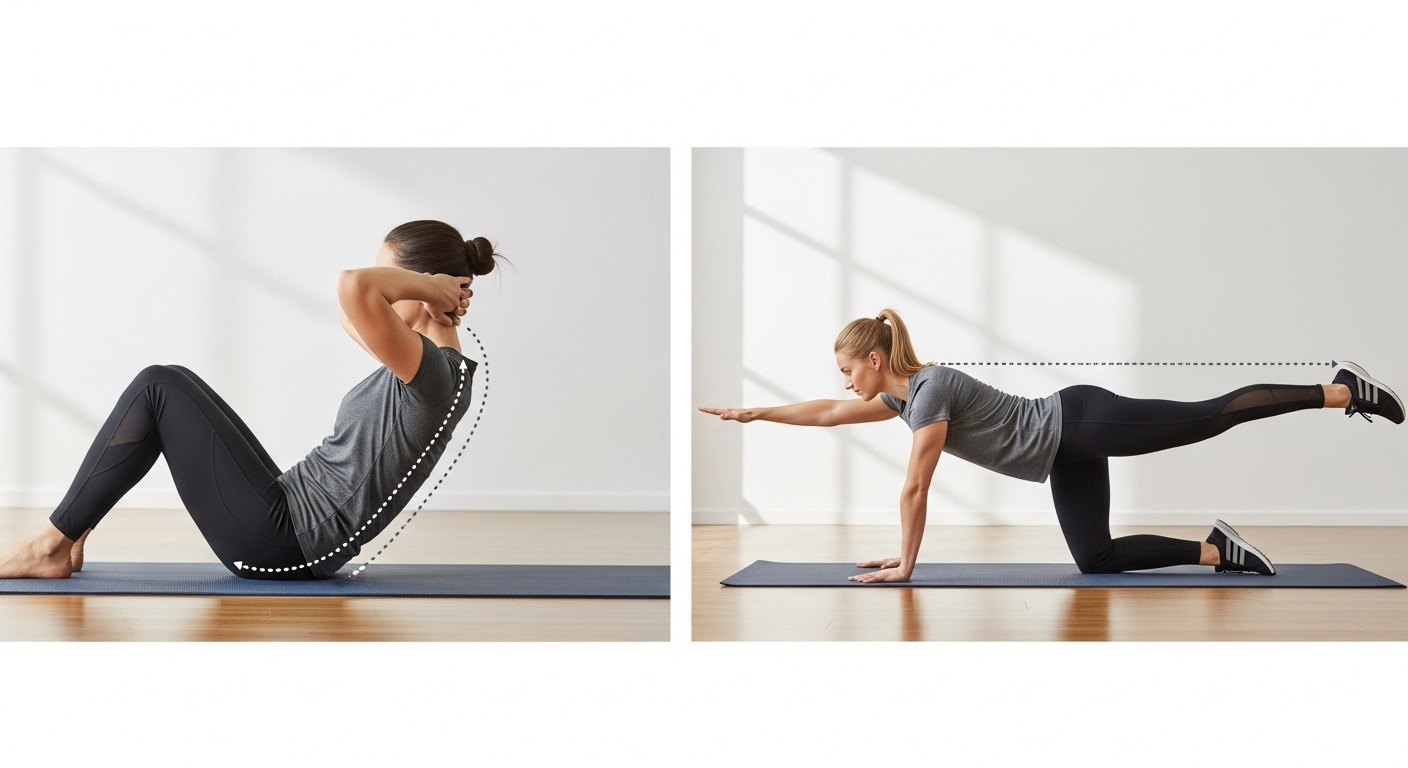
Sit-ups and crunches remain the most popular belly fat exercises worldwide. They are also among the most biomechanically controversial, and for people carrying significant abdominal weight, the risks are amplified.
Dr. Stuart McGill, Professor of Spine Biomechanics at the University of Waterloo and one of the world’s leading spine researchers, has spent decades studying this question. His findings are stark.
“A crunch or traditional sit-up generates at least 3,350 newtons — the equivalent of 340 kg — of compressive force on the lumbar spine. The spine is flexed into the position at which it damages sooner. Repeated daily, this creates cumulative disc stress that may not present as pain until significant damage has occurred.”
The University of Michigan Today adds that “traditional sit-up exercises activate different muscles at levels that put excessive compressive forces on the lower back.” For people with belly fat, the forward weight distribution of abdominal mass changes the biomechanics further, increasing the rotational load on lumbar discs during flexion exercises.
3,350 NMinimum compressive force generated by a single sit-up or crunch on the lumbar spine — equivalent to placing 340 kg on your lower back. Multiply this by 100 daily reps and the cumulative stress becomes clinically significant.Source: Dr. Stuart McGill — University of Waterloo Spine Biomechanics LabThe safest core exercises recommended by spine research for people with belly fat include what Dr. McGill calls the “Big Three” — the bird-dog, the side plank, and the modified curl-up with the lumbar spine held in a neutral position. These movements build core stability without loading the spine in a flexion-dominant, high-pressure pattern.
Exercise Spinal Compression Load Fat-Loss Effectiveness Risk Level Traditional Sit-Up 3,350+ Newtons (340 kg) Low (tones muscle, not fat) HIGH Standard Crunch ~3,000 Newtons Low HIGH Leg Raise (hanging) Moderate Low MEDIUM McGill Bird-Dog Minimal Moderate (stability-building) LOW Side Plank Very Low Moderate LOW Brisk Walking (30 min/day) None High (visceral fat reduction) VERY LOW Moderate Aerobic Cardio (150+ min/week) None to Low Very High LOW Recommended Image: Side-by-side comparison of lumbar spine angles in sit-up vs. bird-dog exercise positionsAlt text: “Diagram comparing spinal compression angle during a traditional sit-up versus a bird-dog exercise, highlighting lower spine stress in the safer alternative.”❤️ Cardiovascular RiskCan Belly Fat Workouts Trigger a Cardiac Event in People Who Already Carry Visceral Fat?
Critical RiskThis is not a scare tactic — it is documented physiology. Visceral fat is metabolically active. It secretes cytokines and adipokines that promote arterial inflammation, insulin resistance, and elevated blood pressure. The American Heart Association states that people with excess visceral belly fat face double the normal risk of heart disease, even if their overall body weight or BMI appears normal.
A 2025 NHLBI study found that every 1% increase in intramuscular fat was linked to a 2% greater chance of reduced blood flow to the heart and a 7% greater probability of a major cardiac event — including heart attack, heart failure, or cardiac death — over a 6-year follow-up window.
+7% per 1%Every 1% increase in fat deposited within muscle fibers correlates to a 7% greater probability of major cardiac events, independent of body weight, liver fat, or fat around the heart.Source: NHLBI / European Society of Cardiology, published January 2025When a person in this physiological state starts a high-intensity belly fat workout program without proper cardiovascular screening, they are applying sudden exercise-induced stress to a system already running close to its limit. Sudden intense exercise can cause rapid blood pressure spikes, arrhythmias in predisposed individuals, and acute demand on coronary arteries that may carry subclinical plaque buildup from years of visceral fat exposure.
“For people carrying a lot of body fat including a big belly — a recognized risk factor for heart disease — high-intensity exercise can reduce fat and create leaner muscle over time. But without proper progression and medical assessment, sudden intense exercise on a compromised cardiovascular baseline is a real risk.”
⚠️ Warning: If you carry significant abdominal fat and have not had a cardiovascular assessment, get medical clearance before starting any moderate-to-high intensity workout program. Signs to watch for mid-workout: chest tightness, dizziness, unusual shortness of breath, jaw or left arm discomfort. Stop immediately if these occur.🧫 Medical Emergency RiskWhat Is Rhabdomyolysis — and Why Do Belly Fat Workout Programs Make It More Likely?
High SeverityRhabdomyolysis (“rhabdo”) occurs when muscle tissue breaks down so rapidly that it floods the bloodstream with a protein called myoglobin. At high concentrations, myoglobin blocks the kidney’s filtering system and can cause acute kidney failure — a life-threatening emergency requiring hospitalization.
Approximately 25,000 exercise-related rhabdomyolysis cases are reported annually in the United States. The Conversation, citing medical researchers, notes that doctors have seen “an uptick in rhabdomyolysis cases, which they attribute to the rise of extreme exercise, such as high-intensity interval training.” Many of these cases involve people starting intense programs with no prior conditioning — exactly the pattern common in belly fat workout programs.
25,000Exercise-induced rhabdomyolysis cases per year in the United States. Risk rises sharply when high-intensity training is combined with multiple muscle groups, extreme temperatures, and inadequate hydration.Source: Reddit r/bodyweightfitness citing medical literature; The Conversation (theconversation.com)The risk profile for belly fat workout-related rhabdo is specific: someone with a sedentary history, carrying abdominal fat that reflects metabolic stress, begins a program that involves hundreds of core repetitions or intense HIIT circuits. Their muscles — particularly the abdominals, hip flexors, and back extensors — are not conditioned for this load. Rapid breakdown follows.
- Warning signs of rhabdo: Severe muscle pain and weakness, dark brown or tea-colored urine (the key red flag), swelling in the affected muscles, significant fatigue, reduced or absent urination.
- Who is most at risk: Sedentary individuals starting intense programs, those training in heat without hydration, people taking certain medications (statins, some antibiotics) that affect muscle metabolism.
- What to do: Seek emergency medical care immediately if you notice dark urine after intense exercise. Treatment requires IV fluid therapy to flush myoglobin from the kidneys.
⚠️ Critical Warning: Mount Elizabeth Medical Center warns that rhabdomyolysis “can lead to accumulation in the kidneys” and that “the resulting toxicity in the body as the muscles break down may lead to kidney failure and even death.” This is not a mild soreness issue — it is a medical emergency.🔩 Structural RiskHow Do Belly Fat Workouts Raise Hernia Risk — and How Do You Know If You Already Have One?
Medium-High RiskA hernia occurs when an organ or fatty tissue pushes through a weakness in the abdominal wall muscle or connective tissue, creating a visible or palpable bulge. The Cleveland Clinic describes it simply as “a hole that develops in your abdominal wall through which organs or fat peek out.”
People who carry excess belly fat already face a higher hernia risk. Tampa Reflux Center notes that “research shows there is a linear relationship between excess weight and hiatal hernia risk, with belly fat being especially problematic.” The overstretching of the abdominal wall from fat mass creates micro-weaknesses in connective tissue. Adding intense intra-abdominal pressure through exercises like heavy lifting, leg raises, or forced crunch repetitions can push tissue through those weak points.
LinearThe relationship between belly fat and hernia risk is linear — meaning more belly fat equals proportionally higher hernia risk, particularly for hiatal hernias and umbilical hernias where abdominal pressure is already elevated.Source: Tampa Reflux Center — Effective Exercises for Hiatal Hernia PreventionBaylor College of Medicine warns that a bulge noticed during or after exercise should be evaluated by a doctor before continuing training. Working out on an undiagnosed hernia can turn a reducible, manageable hernia into a strangulated hernia — a surgical emergency where blood supply to herniated tissue is cut off.
📌 Signs of a potential hernia: A visible bulge in the groin, navel, or abdominal area that may appear or enlarge during exercise; dull aching pain or pressure at the bulge site; discomfort when bending over, coughing, or lifting. If you notice any of these, stop intense core training and see a doctor.⚡ HIIT-Specific RisksWhen Does HIIT for Belly Fat Become More Dangerous Than Helpful?
Context-Dependent RiskHIIT is one of the most researched and consistently recommended tools for reducing visceral fat. Mayo Clinic data suggests HIIT can burn belly fat 67% faster than traditional steady-state cardio. A 2025 PMC study confirmed that HIIT significantly improves VO₂peak and cardiometabolic markers. But the research also reveals a consistent pattern: HIIT’s benefits and risks both depend heavily on who is doing it and how.
A 2025 study published in the Journal of Clinical Medicine (MDPI) found that “some participants may experience a significant increase in intra-abdominal fat after HIIT training” — a finding that points to the cortisol mechanism discussed earlier. People who are already under chronic stress, who are sleep-deprived, or who are metabolically compromised from years of high visceral fat can see HIIT increase abdominal fat due to the cortisol spike it triggers.
67%Faster belly fat burning rate with HIIT compared to traditional cardio (Mayo Clinic data) — but this advantage only materializes when the person has sufficient base fitness, recovery time, and metabolic health to handle repeated high-intensity efforts.Source: Stanford University nutrition page citing Mayo Clinic researchOther HIIT-specific risks for people targeting belly fat include:
- Overuse injuries: Shin splints, stress fractures, joint strains — particularly in people whose joints are already under load from abdominal weight that shifts center of gravity.
- Cardiovascular strain without preparation: Maximal heart rate bursts in people with subclinical cardiovascular compromise from visceral fat exposure.
- Inadequate recovery: HIIT requires 48 hours of recovery between sessions for most people. Daily HIIT for belly fat is a documented path to both cortisol dysfunction and overuse injury.
- Dehydration risk: High sweat rates during HIIT combined with inadequate hydration significantly raise rhabdomyolysis risk, as discussed earlier.
✅ Safe HIIT Protocol for Belly Fat (Research-Backed): Start with 2 sessions per week, not daily. Begin at moderate intensity (60–70% max heart rate) for the first 4 weeks. Increase intensity only after establishing a 6-week aerobic base. Sleep 7–9 hours on recovery nights.✅ Implementation GuideWhat Is the Safest, Most Effective Science-Backed Plan to Reduce Belly Fat Without These Hidden Risks?
Action StepsDuke University research identified aerobic exercise as more effective than resistance training for reducing visceral fat and liver fat. JAMA Network Open research confirms that 150 minutes of aerobic exercise per week — spread across 5 days — is associated with clinically significant reductions in waist circumference and body fat. These are not massive commitments — but they require consistency and proper structure.
The following 12-week timeline reflects what current research supports as safe, progressive belly fat reduction while managing the hidden risks covered above:
Weeks 1–2: Medical Clearance + Base BuildingGet cardiovascular screening. Start 30-minute brisk walks 5 days per week. No high-intensity work yet. Sleep target: 7–9 hours nightly. Eliminate sugary drinks (Rush University recommendation).Weeks 3–4: Aerobic FoundationExtend walks to 45 minutes. Add light swimming or cycling 2x per week. Introduce McGill Big Three core exercises (bird-dog, side plank, modified curl-up) 3x per week — replacing all sit-ups and crunches.Weeks 5–8: Moderate Intensity AdditionAdd 2 moderate HIIT sessions per week (not daily). Keep sessions to 20–25 minutes. Monitor resting heart rate each morning — if elevated by 5+ beats above baseline, take a rest day. Watch for hernia symptoms during any abdominal loading exercise.Weeks 9–12: Progressive IntensityHIIT can increase to 3 sessions per week if resting heart rate, sleep quality, and mood remain stable. Add resistance training 2x per week. Measure waist circumference monthly — this is more meaningful for visceral fat tracking than scale weight alone.01🩺 Get Medical Clearance First
Cardiovascular assessment before starting any intense program. Non-negotiable for people with significant visceral fat.
02🚶 Aerobic Before Intense
Walk 150+ minutes per week before adding HIIT. Duke University data shows aerobic work is the primary driver of visceral fat loss.
03🦴 Replace Crunches
Switch sit-ups for McGill Big Three exercises to protect the lumbar spine from 340 kg+ compressive loads.
04😴 Sleep as a Tool
A study of 70,000 people showed under 5 hours of sleep dramatically increases body fat gain. Sleep is a fat-loss tool.
05📊 Track Cortisol Signals
Resting heart rate, mood, soreness, and sleep quality are cortisol proxies. If all four worsen, reduce workout intensity for 5–7 days.
06💧 Hydrate for Rhabdo Prevention
Drink at least 500 ml of water before any HIIT session. Dark urine after exercise requires immediate medical attention.
🔮 2026 Trends & PredictionsWhat Shifts in Belly Fat Workout Science Are Coming in 2026?
Research directions in exercise science and visceral fat are shifting. The data signals from 2025 studies point clearly toward several developments that will likely define belly fat workout guidance through 2026 and beyond.
Muscle Fat as a Biomarker
The 2025 NHLBI finding on intramuscular fat and cardiac risk will likely push muscle composition testing into mainstream fitness screening by 2026.
AI-Personalized Exercise Programs
Real-time cortisol and heart rate monitoring via wearables will power AI-adjusted workout intensity recommendations, reducing overtraining risk automatically.
“Healthier Fat” Becomes a Treatment Goal
A 2024 study found regular exercisers have structurally healthier belly fat that is less metabolically harmful — shifting goals from pure fat loss to fat quality improvement.
GLP-1 + Exercise Combination Protocols
With GLP-1 receptor agonists reducing visceral fat pharmacologically, research is now defining the exercise protocols that best complement this reduction without overloading a changing body composition.
❓ Frequently Asked QuestionsWhat People Ask About Hidden Belly Fat Workout RisksDirect answers to the most common questions — grounded in current research.
Can you spot-reduce belly fat with ab exercises?No. Research from Mass General Hospital and Harvard Health confirms that abdominal exercises tone muscle but do not burn visceral fat directly. Sit-ups strengthen the muscles under the fat but cannot target fat stored around the organs. Fat loss is a whole-body process driven by caloric balance, aerobic activity, and hormonal response — not by how many crunches you do. Rush University’s doctors put it plainly: “sit-ups can’t eliminate visceral fat directly.”Does overtraining increase belly fat rather than reduce it?Yes, this is a documented risk. Overtraining causes cortisol to spike 30–50% above resting levels during exhaustive sessions. When cortisol stays chronically elevated without recovery, it drives blood sugar up and promotes visceral fat storage in the abdominal region. Healthline’s clinical review of overtraining syndrome specifically lists “excess belly fat” as a symptom of overtraining — along with weight gain and loss of muscle tissue. Working out seven days a week at high intensity without rest is a reliable way to increase belly fat, not reduce it.Are sit-ups dangerous for people who carry a lot of belly fat?They carry measurable risks, particularly for the lumbar spine. Dr. Stuart McGill at the University of Waterloo has shown that a single sit-up or crunch generates at least 3,350 newtons — 340 kg — of compressive force on the lower back. For people carrying significant abdominal weight, this load is further amplified because forward mass shifts the spine’s mechanical angle during flexion. Daily high-rep crunch sessions on a compromised lumbar spine can cause progressive disc stress. The University of Michigan’s research agrees: traditional sit-ups “activate different muscles at levels that put excessive compressive forces on the lower back.”What is the safest exercise to reduce visceral belly fat?Duke University research found that aerobic exercise outperforms resistance training for reducing visceral fat and liver fat. JAMA Network Open confirms that 150 minutes of aerobic activity per week — five 30-minute sessions of brisk walking, swimming, or cycling — produces clinically significant reductions in waist circumference. Rush University’s Dr. Sheila Dugan notes that “for both men and women, the first fat you lose when you exercise is visceral fat” — but only with sustained moderate aerobic activity, not with isolated ab exercises. Start there before adding any high-intensity work.Can intense belly fat workouts trigger a cardiac event?For people with high visceral fat who have not been screened, the risk is real. The American Heart Association states that excess visceral belly fat doubles heart disease risk. A 2025 NHLBI study showed that every 1% rise in muscle fat correlates to a 7% greater chance of heart attack, heart failure, or cardiac death. Starting sudden high-intensity training on a cardiovascular system already under stress from years of visceral fat inflammation — without medical clearance — is a recognized pathway to cardiac events. Get a cardiovascular screening before beginning any moderate-to-high intensity program.What is rhabdomyolysis and can belly fat workout programs cause it?Rhabdomyolysis is a condition where muscles break down so rapidly that they release myoglobin into the bloodstream, which can cause acute kidney failure. About 25,000 exercise-induced cases occur in the US annually. The risk rises sharply when someone with no exercise base starts an intense belly fat workout program — particularly HIIT or high-volume ab circuits — without adequate hydration, rest, or conditioning. The key warning sign is dark brown or tea-colored urine after exercise. This requires immediate emergency medical attention. The condition is treatable but can be fatal if ignored.How long does it take to safely reduce visible belly fat with exercise?Research supports a realistic timeline of 8–16 weeks of consistent moderate aerobic exercise to see measurable reductions in waist circumference. A Duke University study showed aerobic training reduced visceral fat significantly over a 6-month period. JAMA data shows 150+ minutes per week is the threshold for clinically meaningful waist reduction. Trying to accelerate this through daily intense workouts consistently backfires via cortisol elevation, overtraining, injury, and metabolic disruption. Patience and consistency in the moderate range outperform intensity every time in the long-term visceral fat research.📌 Actionable Next StepsWhat Should You Do This Week If You Want to Reduce Belly Fat Safely?
Based on all the research covered, here are concrete actions you can take in the next 7 days — listed in order of priority and research backing:
- Book a cardiovascular health screening (Day 1)Discuss your current belly fat level, activity history, and any family cardiac history with your doctor. Request a basic metabolic panel and resting ECG if you have not had one recently. This takes 30 minutes and removes the biggest unknown risk.Remove sit-ups and traditional crunches from your routine (Day 1)Replace them with McGill’s Big Three: bird-dog, side plank, and modified neutral-spine curl-up. Each takes under 5 minutes to learn from any reputable video source. Your lumbar discs will thank you within 2 weeks.Start 30-minute brisk walks, 5 days this week (Days 1–7)Duke University’s data is clear — this simple intervention is the most powerful evidence-based tool for reducing visceral fat, particularly in the early stages. No equipment required.Set a sleep target of 7–9 hours (Night 1)With a 70,000-person study linking under-5-hour sleep to 30+ lb weight gain, sleep is a non-negotiable fat-loss tool. Set a consistent bedtime this week.Eliminate sugary drinks (Day 1)Rush University identifies this as “one quick fix, a very concrete fix.” Sugar increases belly fat; removing liquid sugar is the single fastest dietary change with the strongest evidence base.Track your resting heart rate each morning (Days 1–7)Download any free heart rate app or use a wearable. A rising resting heart rate over consecutive days is your early warning system for overtraining and cortisol elevation.📚 Sources & Citations
- 1. National Heart, Lung, and Blood Institute (NHLBI) — “Extra Fat in Muscles Linked to Heart Disease Risks,” 2025. European Society of Cardiology.
- 2. UK Research and Innovation (UKRI) — “New Study Finds Hidden Body Fat Is Linked to Faster Heart Ageing,” 2025.
- 3. Rush University Medical Center — “Losing Belly Fat.” Drs. Rasa Kazlauskaite and Sheila Dugan.
- 4. PMC — “Peak Cortisol Response to Exhausting Exercise,” NCBI, 2021.
- 5. Maclean’s Magazine — “The Man Who Wants to Kill Crunches.” Dr. Stuart McGill, University of Waterloo Spine Biomechanics Lab.
- 6. University of Waterloo — “Professor Stuart McGill Explains Risks Associated with Sit-Ups.”
- 7. Cleveland Clinic — “Can Heavy Lifting and Exercise Cause a Hernia?”
- 8. Duke Health — “Aerobic Exercise Bests Resistance Training at Burning Belly Fat.”
- 9. Duke Health — “Visceral Fat Build-Up Is the High Cost of Inactivity.” 8.6% visceral fat increase in 6-month control group.
- 10. JAMA Network Open — “Aerobic Exercise and Weight Loss in Adults: A Systematic Review,” 2024.
- 11. Healthline — “Signs of Overtraining: 13 Tip-Offs and What to Do,” Clinical Review.
- 12. The Conversation — “High-Intensity Workouts May Put Regular Gym Goers at Risk of Rhabdomyolysis.”
- 13. American Heart Association — “Too Much Belly Fat, Even for People with a Healthy BMI, Raises Heart Risks,” 2021.
- 14. Mass General Hospital — “Fitness Myths: Separating Fact from Fiction.”
- 15. Harvard Health — “How to Get Rid of Belly Fat,” Harvard Medical School.
- 16. CNN Health — “Is Cortisol Sabotaging Your Weight Loss Efforts? Experts Sound Off,” 2023.
- 17. Mayo Clinic Research via Stanford — “HIIT Burns Belly Fat 67% Faster.”
- 18. Tampa Reflux Center — “Effective Exercises for Hiatal Hernia Prevention.”
- 19. Michigan Today, University of Michigan — “Just Say ‘No’ to Sit-Ups.”
- 20. Radiological Society of North America (RSNA) — “More Muscle, Less Belly Fat Slows Brain Aging,” September 2025.